Education & SupportResearch
New Research Highlights How AAC Tools and Literacy Adaptations Support Nonspeaking Autistic Individuals
Studies show augmentative communication methods expand expressive capabilities while calling for more inclusive literacy instruction and systemic support.
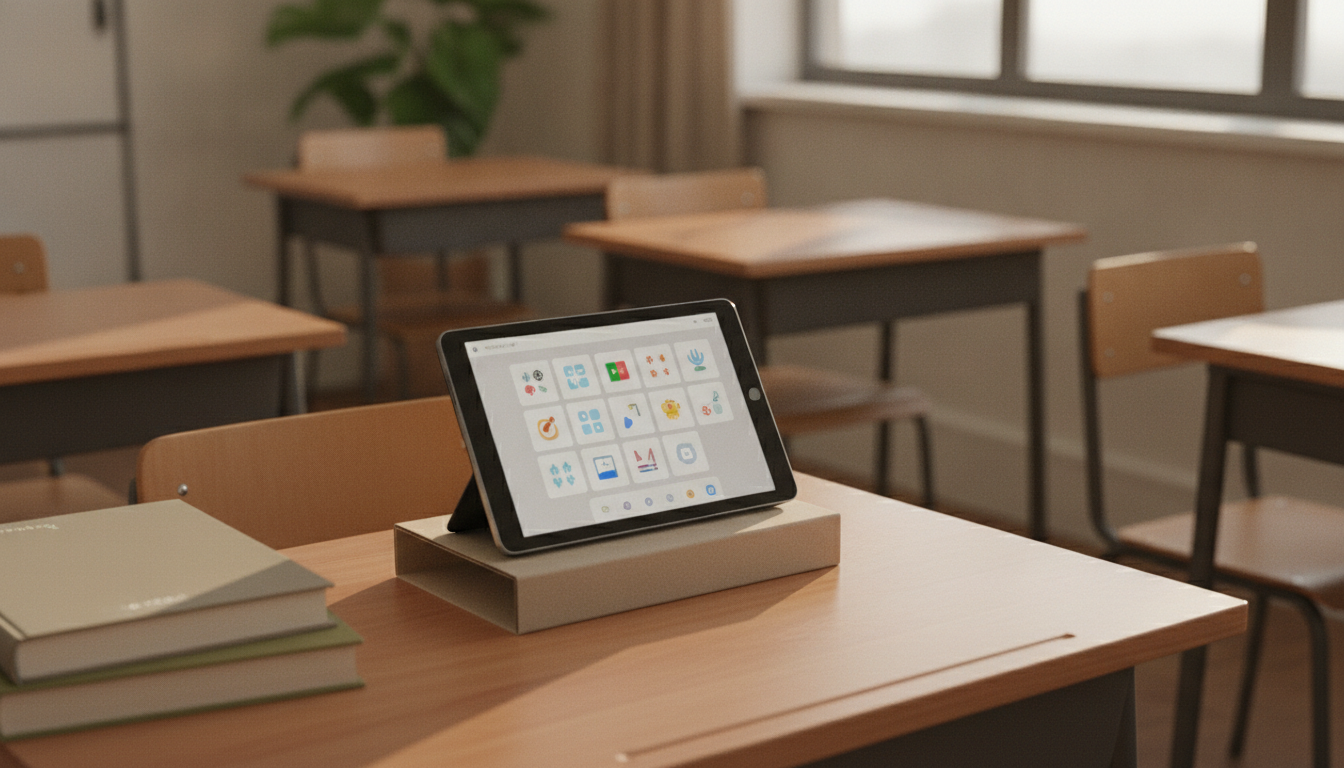
For non-speaking autistic individuals, augmentative and alternative communication (AAC) tools—ranging from picture boards to speech-generating devices—are a vital means of self-expression. A 2024 Frontiers in Psychiatry systematic review (analyzing 32 studies) found that AAC interventions consistently support communication, with no evidence they suppress speech development. However, outcomes vary by individual, and some may develop spoken language alongside AAC use while others rely primarily on their devices. These tools, whether low-tech (like picture cards) or high-tech (like tablet-based apps), require proper assessment and customization to match each user’s motor, sensory, and cognitive profile, as noted in a 2023 International Journal of Speech-Language Pathology study (n=45).
Classroom Implementation and Systemic Barriers
Success depends on environmental support. The same 2023 study found that when educators model AAC use and peers engage with devices, students use them more consistently. However, systemic barriers like inadequate training, funding gaps for device maintenance, and high caseloads often limit real-world effectiveness. A 2026 Autism.org policy report (Source 2) stresses the need for school-wide training and Medicaid coverage to ensure access.
The same 2023 study found that when educators model AAC use and peers engage with devices, students use them more consistently.
Inclusive Literacy and Emerging Approaches
Traditional literacy programs often exclude non-speaking learners due to the presumption of incompetence—a bias critiqued in a 2025 Frontiers in Education perspective piece (Source 1). Preliminary data from small studies, like a 2023 case series in Neuroregulation (n=12), suggest spelling-based methods (e.g., letter boards) may help some individuals express complex thoughts, though evidence remains limited compared to symbol-based systems. The ASHA 2023 position statement (Source 9) cautions against overgeneralizing these findings without further research.
Future Directions: AI and User-Centered Design
Early-stage research, such as a 2016 PMC pilot study (n=8), explores how AI could reduce the cognitive load of generating syntax in AAC devices. However, clinical validation is lacking. Advocates emphasize centering user autonomy in design, as highlighted in ASAN’s 2023 NIDCD comments (Source 2), which call for participatory research with non-speaking individuals.
Sources
- 01Rethinking literacy instruction for nonspeaking autistic learners: a perspective on evidence, exclusion, and the right to read
- 02Augmentative and alternative communication in autism spectrum ...
- 03The influence of classroom context on AAC device use for nonspeaking ...
- 04Research on Language Use in Non-Verbal Autistic People
- 05The role of augmentative and alternative communication for ...
Behind the brief
Adversarial editorial review
Open thread