Education & SupportResearch
Breaking Barriers: New Research Highlights Inequities and Innovations in AAC Access for Non-Speaking Autistic Individuals
Emerging studies reveal racial disparities in communication device access while validating remote delivery and peer-support models, with insights from autistic self-advocates on choosing communication methods.
The AAC Access Gap
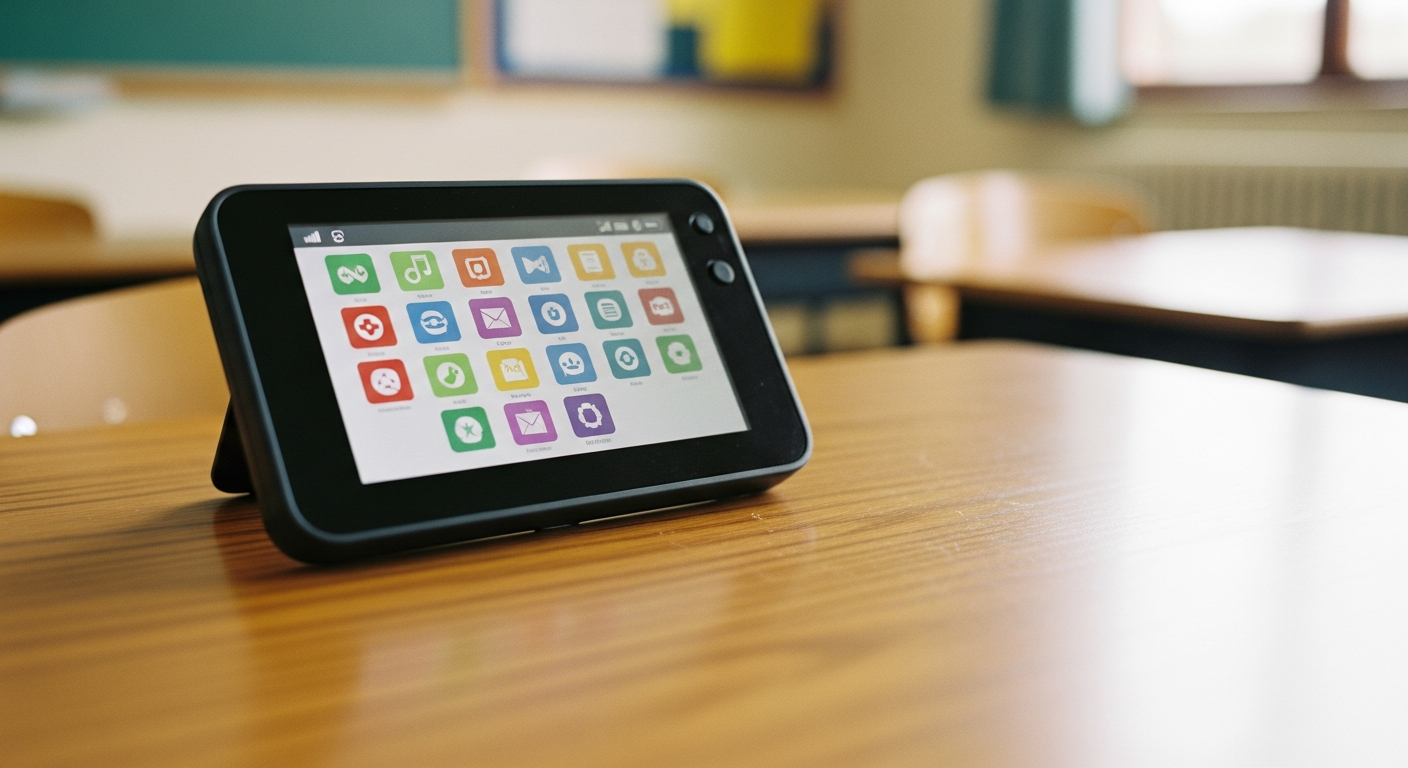
For non-speaking autistic individuals, augmentative and alternative communication (AAC) tools – ranging from low-tech picture boards to high-tech speech-generating devices like Tobii Dynavox or Proloquo2Go – can be transformative. Yet a 2024 study in the Journal of Developmental and Behavioral Pediatrics reveals stark disparities: while 84% of white families with minimally verbal autistic children have AAC devices, only 32% of non-white families do. This racial gap persists even when controlling for income and insurance status through multivariate regression analysis, suggesting systemic barriers in awareness and provider recommendations as noted by the Autistic Self Advocacy Network.
Promising Delivery Models
Two randomized controlled trials published in 2024 with n=40 participants each found remote AAC intervention to be as effective as face-to-face therapy for building initial communication skills over 8 weeks. The ASHA Journal study showed comparable gains in vocabulary acquisition and device mastery across both delivery methods, though researchers caution about digital literacy barriers in underserved communities as highlighted by Frontiers in Education.
Only 28% of SLPs report feeling 'very confident' implementing AAC according to ASHA surveys 2.
Peer support emerges as another strategy. A 2025 single-case design study demonstrated that teaching classmates to model AAC use increased social interactions from a baseline of 2.5 to 3.5 exchanges per hour (40% increase) for participants, though generalization varied significantly.
Persistent Challenges
Despite proven benefits, barriers remain. A PMC analysis identifies key obstacles: 1. Only 28% of SLPs report feeling 'very confident' implementing AAC according to ASHA surveys 2. Medicaid funding gaps leave families waiting 6-18 months for devices in many states as reported by Autism Spectrum News 3. Clinicians often misinterpret stimming or unconventional communication as lack of understanding, despite evidence of rich communicative intent
As autistic scholar Mel Baggs articulated, 'Competence isn't something we lack - it's something others fail to recognize.' This aligns with the presumption of competence framework while acknowledging the need for rigorous assessment of individual capabilities.
Sources
- 01Study Reveals Wide Gap in Awareness of AAC Devices for Children ...
- 02A Randomized Controlled Trial Comparing Face-to-Face Versus ...
- 03A Randomized Controlled Trial Comparing Face-to-Face Versus ...
- 04Teaching peers to support communication: new research on AAC ...
- 05Rethinking literacy instruction for nonspeaking autistic learners: a perspective on evidence, exclusion, and the right to read
- 06Comparing and contrasting barriers in augmentative alternative ...
Common questions
Behind the brief
Adversarial editorial review
Open thread